Resume Keywords That Get You Selected: Trending Skills and How to Use Them
Hiring is shifting from job titles to demonstrable skills. This guide shows which skills are in demand, how to prove them, and how to match your resume to each job description without keyword stuffing.
1. Why Keywords Matter Now
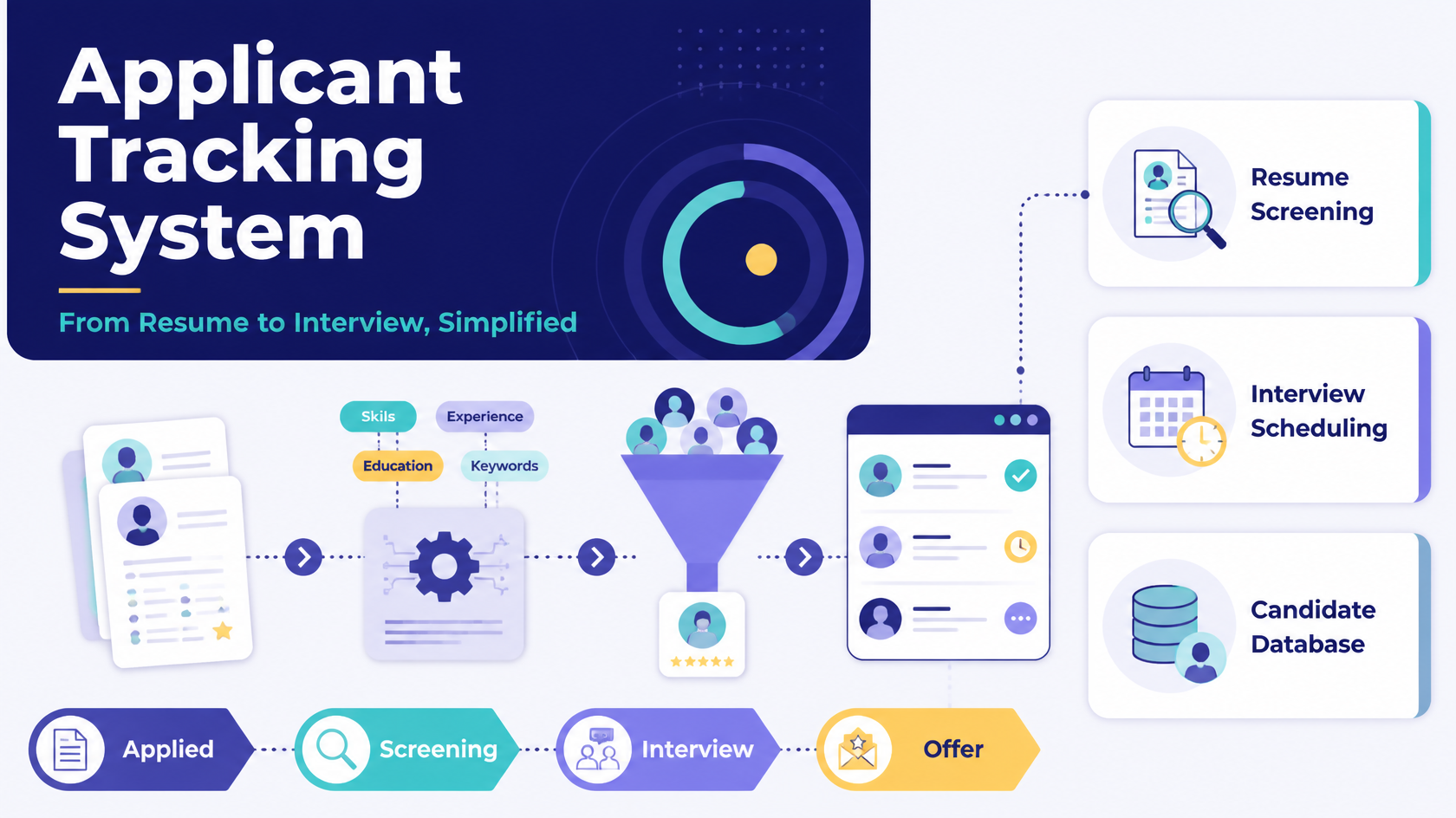
Recruiters increasingly search by skills rather than titles. LinkedIn's 2026 Skills on the Rise report notes that nearly half of recruiters searching on its platform explicitly use skills data to fill roles, and that employers are weighing capabilities over linear career histories. Applicant tracking systems (ATS) add a second layer: they parse your resume, compare it against the job description, and often rank or score the match before a person reads it.
Two consequences follow:
- If a skill is not written on your resume in words the recruiter or system recognises, it effectively does not exist.
- A keyword alone is not enough. Recruiters want to see how you applied the skill and what changed because of it.
2. Trending Skills and How to Show Them
Artificial intelligence
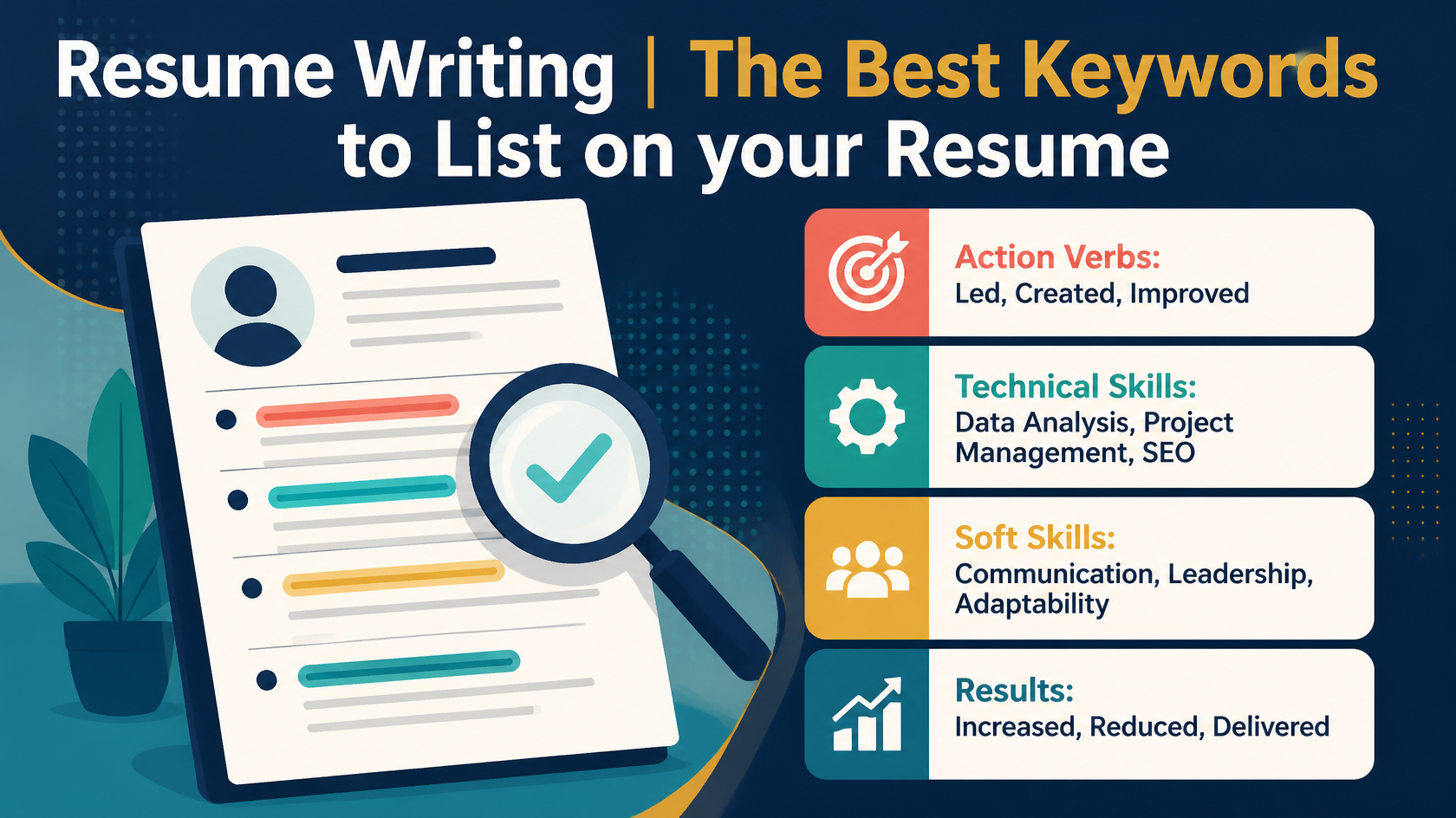
AI dominates current hiring conversations. Many roles ask only for working-level fluency, while some now look for deeper technical skills. Show which level you operate at: used, applied to a workflow, or built or governed. Name the tools or techniques, the use case, and the result.
Example: Introduced an AI-assisted reporting workflow that cut weekly report preparation from 6 hours to 2 across a 10-person team.
Data analytics
Show that you turn data into decisions. Name the method or tool (SQL, dashboards, forecasting, A/B testing), the question you answered, and the business action that followed.
Example: Analysed churn data in SQL and Power BI, identified three at-risk segments, and reduced churn by 4% in two quarters.
Cloud computing
Name the platform and the scope: migration, cost optimisation, architecture, reliability, or security. Scale and savings make it credible.
Example: Led migration of 14 services to Azure, reducing hosting cost by 22% and improving uptime to 99.9%.
Cybersecurity
Even non-security roles benefit from showing risk and compliance awareness: access control, data protection, audit readiness, incident response, relevant standards.
Example: Introduced role-based access reviews that closed 40 audit findings before certification.
Remote collaboration
Show how you deliver across time zones and locations: tools, documentation habits, meeting rhythm, and outcomes of distributed teams.
Example: Coordinated a three-country team using async planning and weekly demos, delivering on schedule for four consecutive releases.
Note: these five are widely cited, but how much each matters depends on your function. LinkedIn now publishes in-demand skills separately for 12 job areas (including IT, finance, HR, project management and sales), so check your own function's list as well.
3. Soft Skills Recruiters Want, and How to Prove Them
Employers still prize skills AI cannot replace, such as cross-team collaboration, client relations and leadership. A soft skill listed without proof reads as filler. Pair each with a specific story.
|
Skill |
How to prove it on your resume |
|---|---|
|
Problem solving |
State the problem, your approach, and the measurable fix |
|
Leadership |
Team size, people you developed, decisions you made, results delivered |
|
Communication |
Stakeholders you managed, executive updates, negotiations, documentation you created |
|
Adaptability |
A change in scope, tool, market or organisation, and how you adjusted and delivered |
|
Business sense |
Revenue created, cost saved, or efficiency gained |
4. How to Match Your Resume to a Job Description
- Read the job description twice. Highlight the job title, required skills, tools, certifications and years of experience. The title is the most important keyword.
- Group keywords into must-have and nice-to-have. Repeated terms usually signal priority.
- Compare with your resume. Mark what you already have, what you have but phrase differently, and what you genuinely lack.
- Mirror the employer's language truthfully. If the posting says "stakeholder management" and you wrote "client coordination", use their phrase where it is accurate.
- Write terms in both forms: the full name and the acronym, for example Search Engine Optimisation (SEO) or Customer Relationship Management (CRM).
- Place keywords in context. Use them in your summary, skills section and, most importantly, in achievement bullets where they are backed by results.
- Keep a master resume with everything you have done, and trim a tailored version for each application. Reorder bullets so the most relevant ones come first.
5. Do's and Don'ts
Do
- Use standard section headings (Summary, Experience, Skills, Education, Certifications).
- Keep the layout simple and readable. Complex tables, graphics and columns can confuse parsers.
- Quantify results wherever possible.
- Apply the same wording across your resume and LinkedIn profile.
Don't
- Add skills you do not have. Recruiters verify claims in interviews and background checks.
- Stuff keywords into a block of text or hide them in white font. Recruiters report such tactics do not work, and many systems expose hidden text.
- Use one generic resume for every application.
- List keywords with no evidence.
6. Before and After
Before: Worked on cloud projects and supported the team with data tasks. Good communication skills.
After: Led migration of 14 services to AWS for a 9-member team, cutting hosting cost by 22%; built SQL and Tableau dashboards that guided pricing decisions; presented monthly progress to senior stakeholders across three regions.
The second version contains more keywords, but the real difference is that each keyword is tied to scope, action and result.
7. Quick Checklist Before You Apply
- Job title in the job description appears in your headline or summary.
- Top five required skills appear in your resume, in context.
- Acronyms and full forms are both used.
- Every major skill has at least one result attached.
- Soft skills are shown through examples, not listed alone.
- Nothing on the resume is exaggerated or unverifiable.
- Resume is saved in a standard, parser-friendly format.
8. Key Takeaway
Keywords get your resume found, and evidence gets you selected. Match the job description honestly, show how you applied each skill, and keep a skills inventory so every application can be tailored in minutes.